
(or even Basildon)
Why waste analysis is crucial …
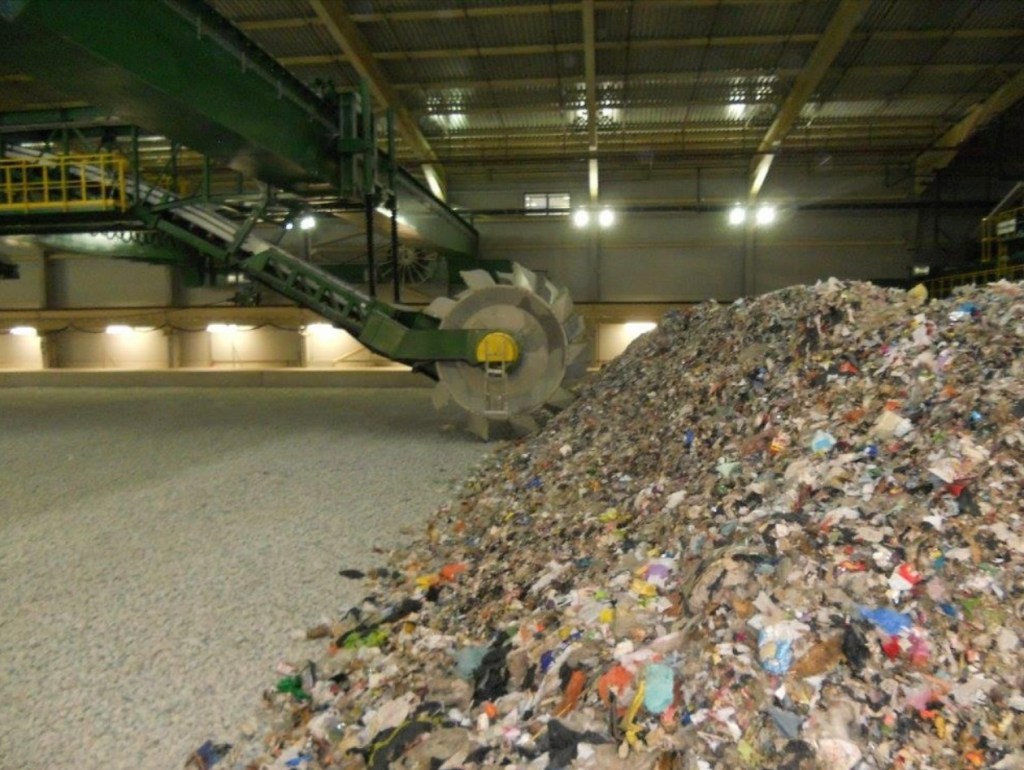
The same team moved on to Basildon in Essex. This time we were installing three gigantic Rotopala (bucket wheel) compost turners in a new build at Tovi EcoPark, the cornerstone of Essex’s waste management strategy for the next thirty years.
Variously living between the lovely little city of Brentwood and Langdon Hills, these were pleasant years, great friends and a project to be proud of. Four hundred thousand tonnes per year of residual MSW were to be processed and with recyclables removed, the organic fraction was to be converted to a compost-like-output for use as landfill cover and as a sustainable, solid recovered fuel (SRF) in biomass burners for combined-heat-and-power plants.
Our project went well, of course there are always delays when transporting huge components from as far away as Zaragoza – especially when some bright-spark decides to try to get a Cat 2 STGO over the Dartford Crossing without an escort or permission! Such things are sent to try us.
The design and manufacture of our equipment was world class and while our people were not used to installing such equipment in an active construction site, good communications and an excellent relationship with Balfour Beatty kept everything running smoothly.
Most of our time was spent managing our own installation, but every so often we could make a breakout and see the MRF being built at the entrance to the site. An impressive array of technologies was on display with computer controlled optical separators always grabbing our attention.
Cold commissioning went without incident and then came the big day when the first waste would be processed and ultimately delivered to our three bio-halls.
“Feathers! It’s just feathers!”
My heart sank when I saw what Michael was talking about, there were going to be some serious problems. We could see that the material coming to us for processing was very light, certainly not complying with the design parameters that had been given to Zaragoza or the construction planners in Canary Wharf.
Simply put, there was nothing that we could do; the waste density was wrong, so there wasn’t enough space. Different solutions were attempted with varying levels of success, even using the system for bio-drying rather than composting, the equipment could do either.
Ultimately, after about five years the Courts decided against UBB Essex, in favour of Essex County Council and the facility is to be demolished.
A sad day.
Let me say this: the plant worked! None of the components from the MRF to the Rotopala’s, the leachate and aeration systems had any problems after hot commissioning. To the friends I made and the colleagues I worked with, this was a good job, well done.
 aprenco